


How to Strengthen Your Child’s Fine Motor Skills Through Play

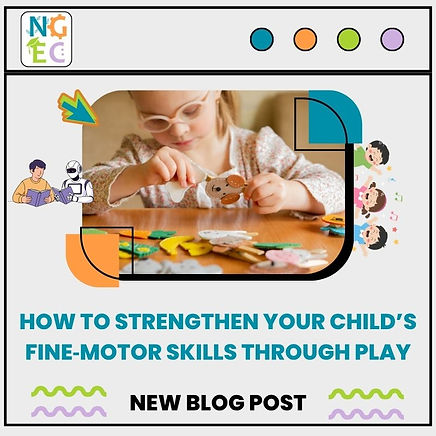
🌟 Introduction — Why Do Fine Motor Skills Matter So Much?
Fine motor skills are the small but mighty movements that help children grasp, pinch, draw, button, cut, build, and eventually write. These skills don’t develop through worksheets — they grow through hands‑on play, exploration, and everyday routines. When children strengthen the muscles in their hands, wrists, and fingers, they build the foundation for independence, creativity, and school readiness.
Let’s explore playful, meaningful ways to support fine motor development at home.
🧱 1. Building and Stacking Strengthens Hand Muscles
Construction play builds grip strength, coordination, and control.
Examples:
Wooden blocks
LEGO or DUPLO
Magnetic tiles
Stacking cups
Children learn to grasp, balance, and manipulate objects with precision.
🧵 2. Threading and Lacing Build Coordination
Threading activities strengthen the pincer grasp — essential for writing.
Examples:
Beads on string
Pasta on yarn
Lacing cards
Pipe cleaners through colanders
These activities improve focus and hand‑eye coordination.
✂️ 3. Cutting Practice Builds Control and Confidence
Scissor skills develop hand strength and bilateral coordination (using both hands together).
Ideas:
Cutting playdough
Cutting straws
Snipping paper strips
Cutting lines or shapes
Start with simple snips and build up gradually.
🖍️ 4. Drawing, Scribbling, and Mark‑Making Build Pre‑Writing Skills
Before children write letters, they need to explore lines, shapes, and patterns.
Examples:
Crayons
Markers
Chalk
Paintbrushes
Water painting outside
These activities strengthen wrist movement and creative expression.
🧩 5. Puzzles Strengthen Spatial Awareness and Dexterity
Puzzles require grasping, rotating, and placing pieces — all fine motor gold.
Examples:
Knob puzzles
Chunky puzzles
Jigsaw puzzles
Shape sorters
Puzzles also build problem‑solving and persistence.
🧈 6. Playdough Is a Fine Motor Powerhouse
Playdough strengthens every muscle in the hand.
Try:
Rolling
Pinching
Squishing
Cutting
Making shapes
Add tools like cookie cutters, rollers, and stamps for extra fun.
🫘 7. Sensory Bins Build Hand Strength and Coordination
Scooping, pouring, and grabbing small items builds control and precision.
Fill bins with:
Rice
Beans
Sand
Pom‑poms
Buttons
Water beads (supervised)
Add cups, spoons, tweezers, and funnels for extra challenge.
🧺 8. Everyday Tasks Build Real‑World Skills
Fine motor development happens naturally through daily routines.
Examples:
Helping zip jackets
Buttoning shirts
Opening containers
Pouring water
Stirring ingredients
Peeling fruit
These tasks build independence and confidence.
🎨 9. Arts and Crafts Strengthen Precision and Creativity
Crafting invites children to use tools and materials in purposeful ways.
Examples:
Stickers
Glue sticks
Tearing paper
Stamping
Using hole punchers
Crafts build control, planning, and expressive skills.
🧠 10. Keep It Fun, Low‑Pressure, and Child‑Led
Fine motor skills grow best through joyful exploration — not forced practice.
Encourage:
Choice
Creativity
Repetition
Open‑ended play
Celebrate effort, not perfection.
🌟 Conclusion — Strong Hands Grow Through Play
Fine motor development doesn’t require worksheets or structured lessons. It grows through play, creativity, exploration, and everyday routines. Every time your child squeezes playdough, threads beads, builds a tower, or helps in the kitchen, they’re strengthening the muscles and skills they’ll use for writing, dressing, and independence.
You’re doing an incredible job supporting your child’s development — one playful moment at a time.
This blog post was created with the assistance of AI.


Comments